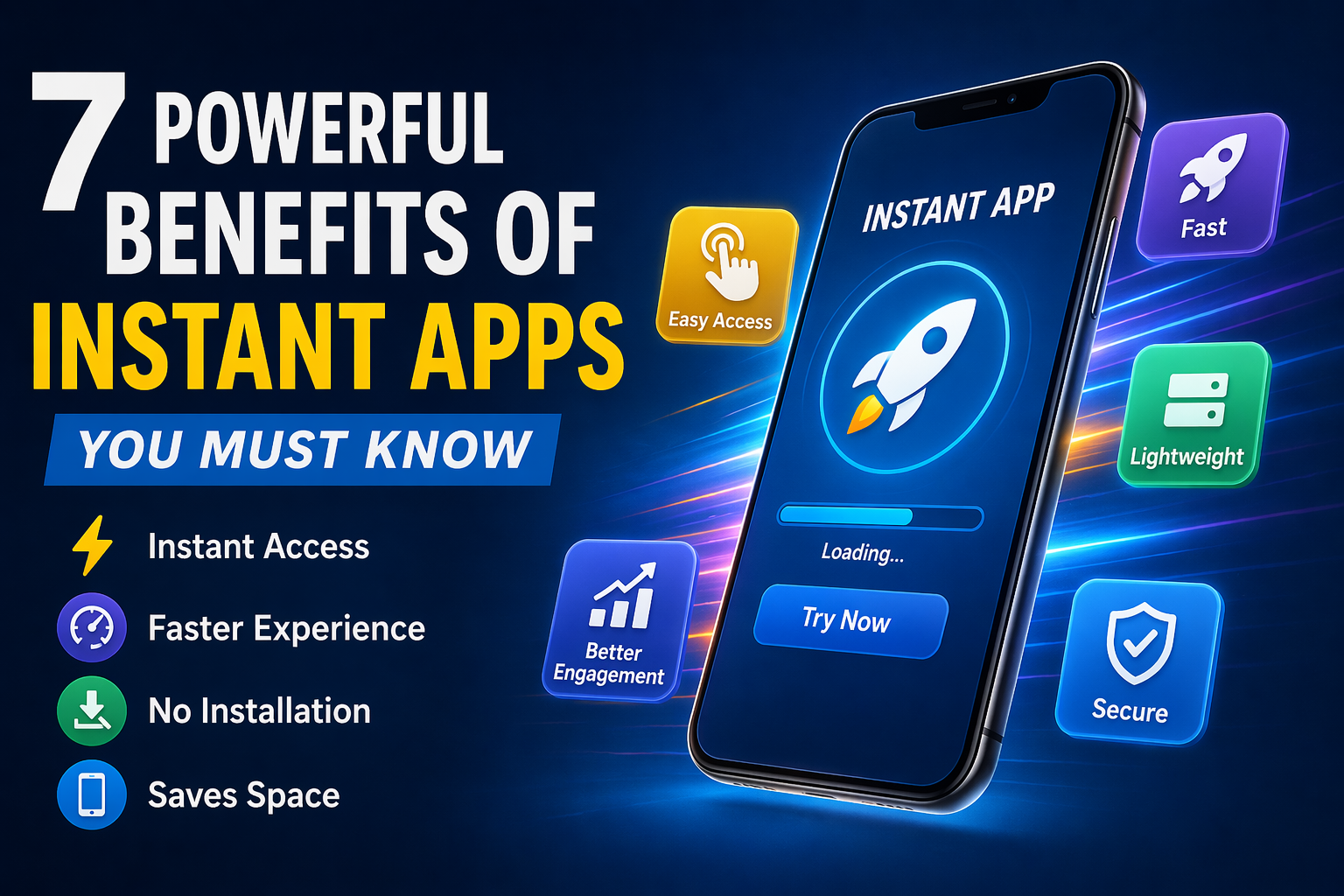
In today’s fast-paced digital world, users demand speed, convenience, and efficiency. This is where instant apps are transforming the way people interact with mobile technology. Unlike traditional applications that require full installation, these apps allow users to access features instantly without taking up storage space or time. This innovation is rapidly gaining popularity among both developers and users.
The growing reliance on smartphones has made it essential to streamline user experiences. Instant apps offer a seamless solution by eliminating the need for downloads while still providing rich functionality. As attention spans shorten and expectations rise, businesses are turning toward this technology to enhance engagement and reduce friction in user journeys.
What Are Instant Apps?
At their core, instant apps are lightweight versions of mobile applications that can be accessed directly through a link. Users can try out features without installing the full application, making them incredibly convenient. This approach not only saves time but also removes the commitment barrier often associated with downloading new apps.
From a technical perspective, they are modular, meaning they load only the components needed for a specific task. This design ensures faster performance and efficient resource usage. For users, it feels like accessing a website but with the power and responsiveness of a native app experience.
How It Works
The functionality behind it is built on an advanced app architecture that allows partial downloads. When a user clicks a link, only the required part of the app loads, enabling immediate interaction. This eliminates the waiting time typically associated with full installations.
Developers structure their applications into smaller modules so that instant apps can deliver targeted functionality. This approach ensures that users get exactly what they need without unnecessary data usage. It also enhances performance, especially on devices with limited storage or slower internet connections.
Key Benefits of Instant Apps
One of the biggest advantages of it is convenience. Users can quickly access services without worrying about storage space or long installation times. This is especially useful for one-time tasks like booking tickets, making payments, or trying out new services.
Another major benefit is improved user engagement. Since instant apps reduce barriers to entry, more users are likely to interact with them. Businesses can attract potential customers who might hesitate to download a full application, ultimately increasing conversion rates and user satisfaction.
Instant Apps vs Traditional Apps
When comparing it to traditional apps, the most obvious difference is accessibility. Traditional apps require downloading, installing, and updating, which can be time-consuming. In contrast, it provides immediate access with minimal effort.
However, traditional apps still have their place for long-term usage and advanced features. While instant apps are ideal for quick interactions, full applications are better suited for users who need regular and in-depth functionality. Both approaches complement each other in today’s app ecosystem.
Use Cases of Instant Apps
There are many practical applications for instant apps across different industries. In e-commerce, users can preview products or complete quick purchases without installing an app. This reduces friction and encourages spontaneous buying decisions.
Similarly, in travel and entertainment, it allows users to book tickets, access content, or explore services instantly. These use cases highlight how businesses can leverage this technology to provide efficient and user-friendly experiences.
Impact on User Experience
User experience is at the heart of digital success, and instant apps significantly enhance it. By removing the need for downloads, they provide a faster and smoother journey for users. This leads to higher satisfaction and better retention rates.
Moreover, it reduces frustration caused by limited storage or slow internet speeds. Users can enjoy app-like functionality without the usual constraints, making the overall experience more enjoyable and accessible to a wider audience.
Challenges and Limitations
Despite their advantages, instant apps are not without challenges. One limitation is that they cannot provide the full functionality of traditional apps. Complex features and heavy data processing may still require a complete installation.
Additionally, developing instant apps requires careful planning and expertise. Developers must ensure that the modular structure works seamlessly, which can increase development time and costs. However, the long-term benefits often outweigh these initial challenges.
Future of Instant Apps
The future of it looks promising as technology continues to evolve. With increasing internet speeds and improved mobile hardware, these apps are expected to become even more powerful and widespread.
Businesses are likely to invest more in instant apps to stay competitive and meet user expectations. As digital experiences continue to prioritize speed and convenience, this technology will play a crucial role in shaping the next generation of mobile applications.
Role of Instant Apps in Digital Marketing
Instant apps are changing the way businesses approach digital marketing by making user interaction quicker and more seamless. Instead of asking users to download a full application, brands can now offer immediate access through a simple link. This reduces drop-off rates and allows marketers to capture user interest at the exact moment of intent.
Another advantage is better campaign performance tracking. It enables businesses to analyze user behavior in real time, helping them optimize their strategies. With faster access and fewer barriers, companies can improve conversions and deliver more personalized experiences to their audiences.
Security and Privacy in Instant Apps
Security is always a major concern in the digital world, and instant apps are designed with strong safety measures in place. Since users do not install the full application, permissions are limited, which reduces the risk of data misuse. This creates a safer environment for users who are cautious about granting access to their devices.
At the same time, developers must ensure that it follows strict security protocols. Proper encryption and secure data handling are essential to maintain user trust. As this technology grows, continuous improvements in privacy and protection will play a key role in its adoption.
Development Process of Instant Apps
Creating instant apps requires a different approach compared to traditional app development. Developers need to break down the application into smaller modules that can be loaded independently. This modular structure ensures that users only access the features they need without downloading unnecessary components.
The development process also involves optimizing performance and reducing load times. Developers must carefully test each module to ensure smooth functionality. Although this approach may require additional effort initially, it results in a more efficient and flexible application.
Why Businesses Should Adopt Instant Apps
Businesses today are constantly looking for ways to improve customer engagement, and instant apps offer a powerful solution. By providing quick access to services, companies can attract users who may not want to commit to downloading a full application. This increases reach and helps businesses connect with a wider audience.
In addition, it can give businesses a competitive edge in crowded markets. They allow companies to showcase their services instantly, creating a strong first impression. As user expectations continue to evolve, adopting this technology can help businesses stay relevant and ahead of the competition.
Conclusion
In conclusion, instant apps represent a significant shift in how users interact with mobile technology. They offer unmatched convenience, faster access, and improved user experiences, making them a valuable tool for both businesses and consumers.
As the digital landscape continues to evolve, adopting instant apps can provide a competitive edge. By embracing this innovative approach, businesses can meet modern user demands while delivering efficient and engaging experiences that drive growth and success.