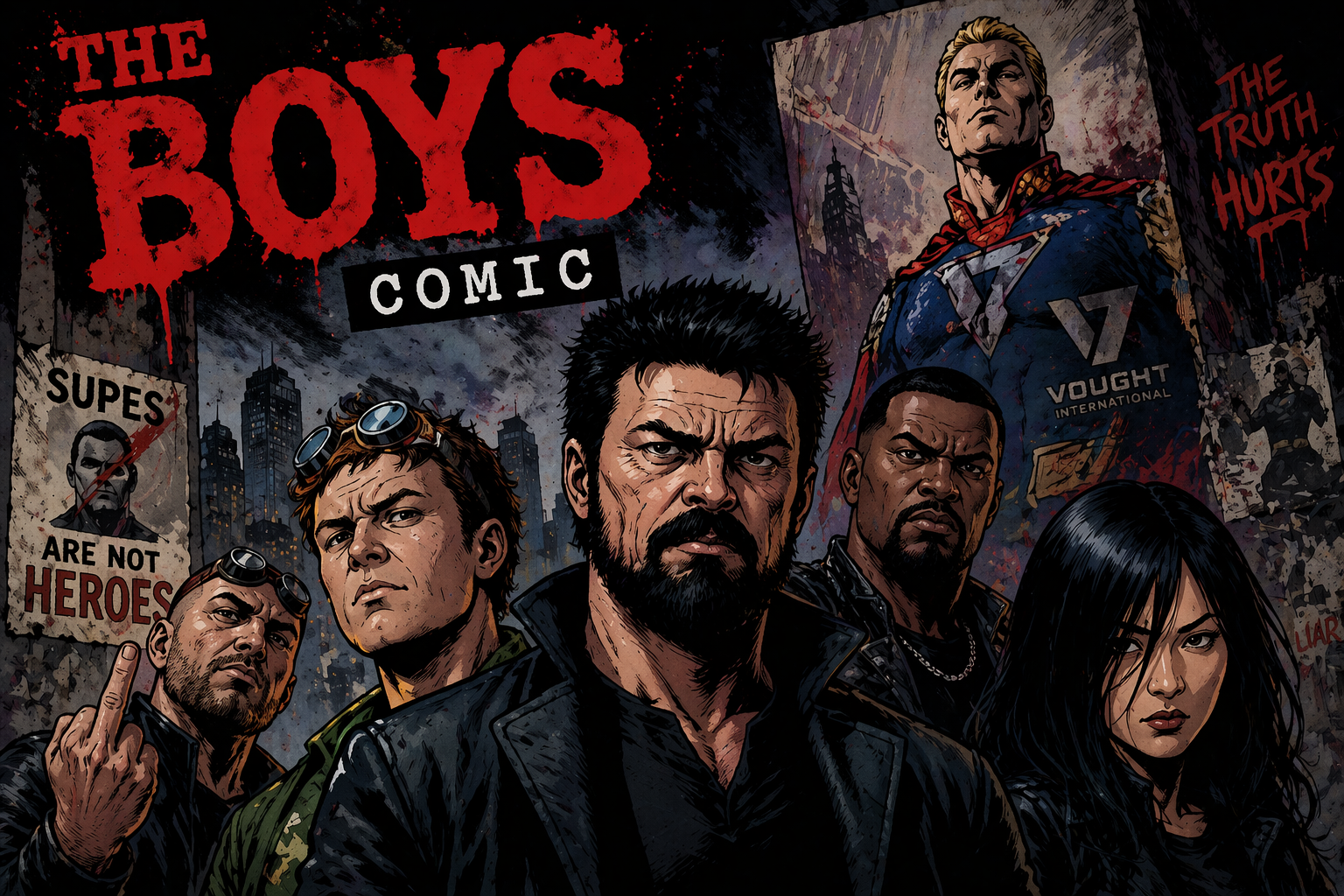
The Boys Comic stands out as one of the most daring and unconventional creations in the world of graphic storytelling. Unlike traditional superhero narratives that glorify heroes as flawless saviors, this series flips the script by exposing the darker side of power and fame. Created by Garth Ennis and illustrated by Darick Robertson, it dives deep into a world where superheroes are often corrupt, reckless, and driven by selfish motives rather than justice.
What makes The Boys Comic so compelling is its raw, unapologetic tone. It doesn’t shy away from violence, satire, or controversial themes, making it a unique experience for readers who want something beyond typical comic book storytelling. The narrative challenges readers to question morality, authority, and the very idea of heroism itself.
The Origins and Creation
The Boys Comic was first published in 2006 and quickly gained attention for its bold storytelling. Initially released by WildStorm before moving to Dynamite Entertainment, the series carved out a niche audience that appreciated its rebellious approach. The creators aimed to critique the growing commercialization of superheroes in mainstream media.
Behind its creation lies a clear intention: to deconstruct the superhero genre. Instead of presenting caped figures as idols, The Boys Comic portrays them as flawed individuals with dangerous levels of power. This origin story is crucial to understanding why the series feels so different and impactful compared to traditional comics.
Plot Overview and Story Structure
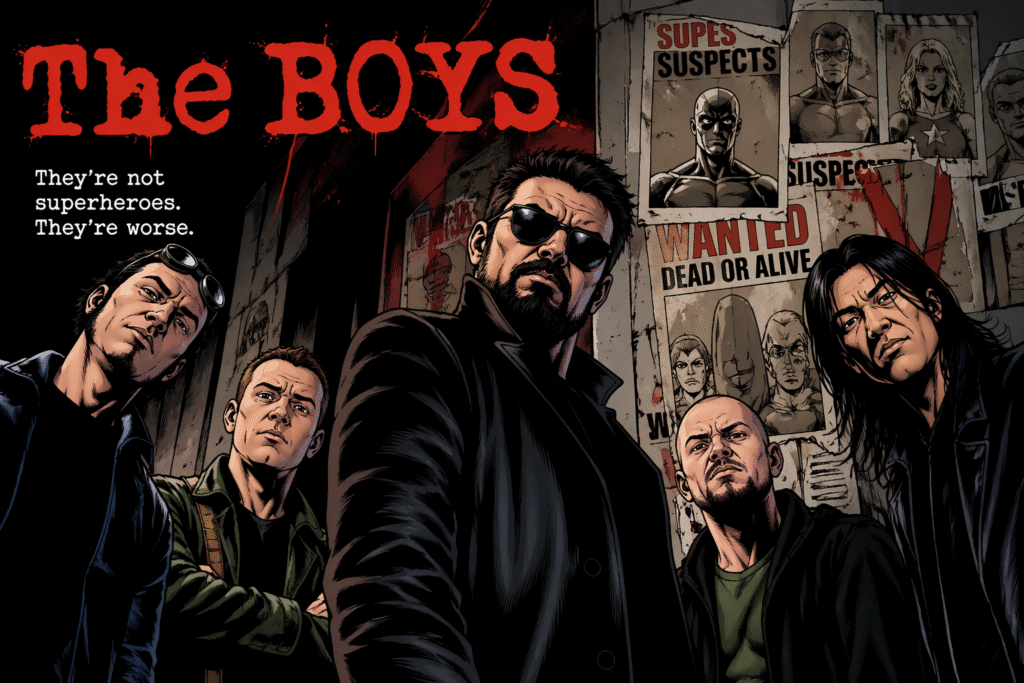
At its core, The Boys Comic follows a group of vigilantes tasked with keeping superheroes in check. These individuals, known as “The Boys,” operate in secrecy, using intelligence, manipulation, and brute force to control superpowered beings who abuse their abilities. The narrative unfolds through multiple arcs, each revealing deeper layers of corruption and conspiracy.
The structure of The Boys Comic is episodic yet interconnected, allowing readers to explore individual missions while gradually uncovering a larger, more sinister plot. This layered storytelling keeps the audience engaged, offering both immediate action and long-term intrigue that builds across the series.
Key Characters and Their Roles
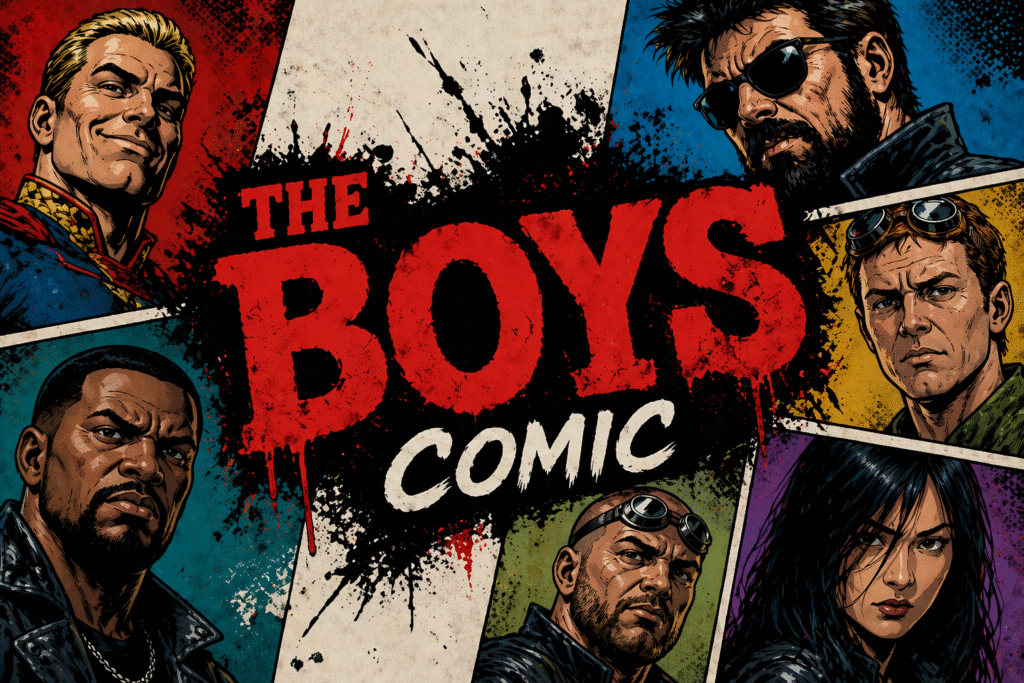
The characters in The Boys Comic are complex and morally ambiguous, which adds depth to the story. Billy Butcher, the ruthless leader of the group, is driven by personal vendettas and a deep hatred for superheroes. Hughie Campbell, on the other hand, serves as the emotional anchor, representing the audience’s perspective as he navigates this brutal world.
On the opposing side, the superheroes—often referred to as “Supes”—are far from heroic. They are portrayed as arrogant, irresponsible, and often dangerous. The contrast between The Boys and the Supes creates intense conflict, making The Boys Comic a character-driven narrative that thrives on tension and unpredictability.
Themes and Social Commentary
One of the strongest aspects of The Boys Comic is its sharp social commentary. It critiques celebrity culture, corporate greed, and the blind worship of powerful figures. By presenting superheroes as flawed and corrupt, the series forces readers to reconsider their perception of authority and fame.
The Boys Comic also explores themes of revenge, morality, and the consequences of unchecked power. It raises important questions about justice and whether the ends truly justify the means. These themes resonate with readers, making the story not just entertaining but also thought-provoking.
Art Style and Visual Impact
The artwork in The Boys Comic plays a significant role in conveying its tone. Darick Robertson’s illustrations are gritty, detailed, and often graphic, perfectly complementing the story’s dark themes. The visual style enhances the realism of the world, making the violence and emotions feel more intense.
Another notable aspect of the art in The Boys Comic is its ability to balance shock value with storytelling. While some scenes are deliberately disturbing, they serve a purpose in highlighting the brutality of the world. This visual approach ensures that the comic leaves a lasting impression on its readers.
Differences from Traditional Superhero Comics
The Boys Comic breaks away from the traditional superhero mold in several ways. Instead of focusing on saving the world, it highlights the consequences of having superpowers without accountability. This shift in perspective sets it apart from mainstream titles that often celebrate heroism.
Moreover, The Boys Comic embraces a more mature and realistic tone. It doesn’t rely on clear-cut heroes and villains but instead presents a morally gray universe. This complexity makes it appealing to readers who are looking for a more nuanced and unconventional take on the genre.
Popularity and Cultural Influence
Over the years, The Boys Comic has gained a dedicated fan base and significant cultural influence. Its success eventually led to a television adaptation, which brought the story to a wider audience. The adaptation further amplified interest in the original comic series.
The impact of The Boys Comic can be seen in how it has inspired other creators to explore darker and more realistic themes in superhero storytelling. It has become a benchmark for narratives that challenge the traditional norms of the genre, proving that audiences are ready for more complex stories.
Controversies and Criticism
Despite its popularity, The Boys Comic has not been without controversy. Its graphic content, explicit language, and provocative themes have sparked debates among readers and critics alike. Some argue that it pushes boundaries too far, while others believe it is necessary for the story it aims to tell.
Criticism of The Boys Comic often centers on its extreme portrayal of violence and morality. However, supporters argue that these elements are essential to its message. The controversy itself has contributed to the comic’s notoriety, making it a topic of discussion within the industry.
Why The Boys Comic Stands Out
What truly makes The Boys Comic stand out is its fearless approach to storytelling. It doesn’t conform to expectations or shy away from uncomfortable truths. Instead, it embraces its unique identity, offering readers a fresh perspective on a familiar genre.
The Boys Comic succeeds because it combines compelling characters, intense action, and meaningful themes. It challenges readers to think critically while keeping them entertained, making it a standout work in the world of graphic novels.
Conclusion
The Boys Comic is more than just a story about superheroes—it is a bold critique of power, corruption, and society. Its unique approach and unapologetic tone have made it a significant contribution to modern comic literature. For readers seeking something different, it offers an unforgettable experience.
In the end, The Boys Comic proves that the superhero genre can be reimagined in powerful ways. By breaking conventions and embracing complexity, it has secured its place as one of the most impactful and talked-about series in recent years.